
Menu
Get Towing Now
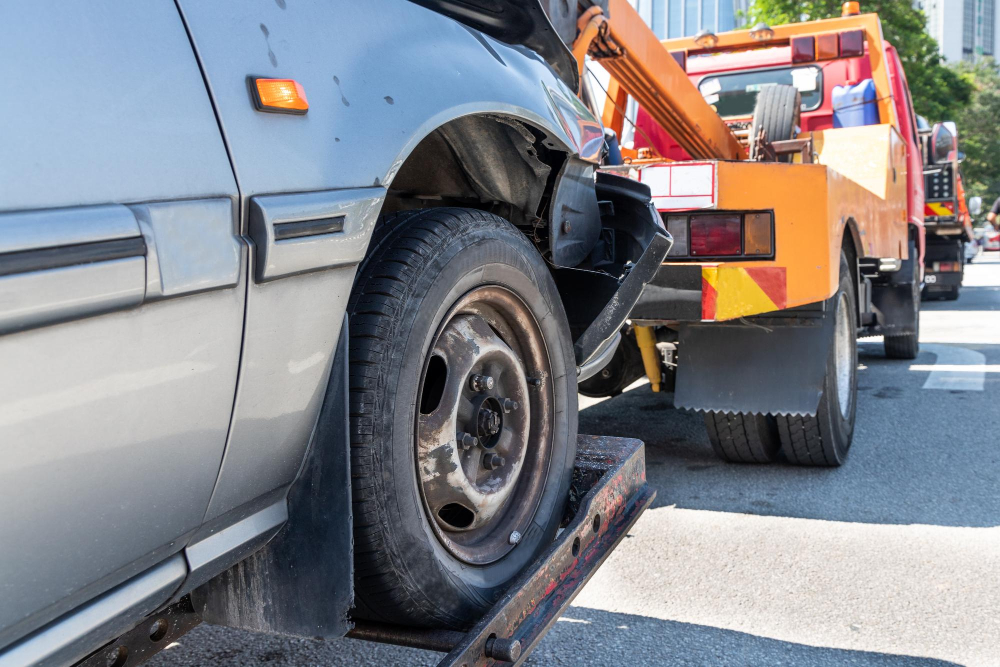
Not every towing situation is the same — and neither is every tow truck. From compact cars to heavy-duty rigs, each vehicle requires the right equipment to ensure a safe and damage-free tow. Using the wrong type of truck can lead to unnecessary wear, drivetrain issues, or even more costly repairs.
Understanding the different types of tow trucks can help you make informed decisions when roadside trouble strikes. Whether it’s a simple flat tire, a long-distance transport, or a complete recovery job, knowing which tow truck fits your needs can save time, money, and stress.
Here’s a straightforward guide to seven common types of tow trucks — and how to know which one you really need.
Flatbed trucks are the most versatile and commonly used type. The truck bed tilts and lowers to create a ramp, allowing vehicles to be winched or driven onto the platform.
All-wheel-drive (AWD) and four-wheel-drive (4WD) vehicles
Luxury, exotic, or low-clearance cars
Long-distance or accident transport
The entire vehicle is lifted off the ground, preventing tire and transmission wear — ideal for damage-free towing.
Wheel-lift tow trucks use a hydraulic yoke to lift either the front or rear wheels off the ground while the other two remain in contact with the road.
Front- or rear-wheel-drive vehicles
Local tows and short distances
Tight parking areas or garages
It’s fast, affordable, and perfect for standard towing jobs within Clermont and nearby areas.
Integrated (or “self-loader”) tow trucks combine a wheel-lift and boom system into one unit. They’re powerful, stable, and ideal for larger or commercial vehicles.
Buses, RVs, and heavy-duty trucks
Accident recovery or fleet towing
Municipal or enforcement towing
It’s efficient and strong — ideal for recovering vehicles from difficult or high-traffic situations.
Once the standard in towing, hook-and-chain trucks use chains to lift part of a transport vehicle. Because this method can cause damage, it’s now limited to specific uses.
Wrecked, junk, or salvage vehicles
Off-road or non-drivable vehicles
Not suited for modern vehicles, but still practical for scrap or off-road recovery.
Heavy-duty tow trucks are built for strength. With reinforced booms, winches, and underlifts, they can safely haul extremely heavy or oversized vehicles.
Semi-trucks, dump trucks, buses, and large machinery
Commercial fleet towing
Accident recovery involving large vehicles
These trucks provide unmatched towing power and control — essential for large-scale jobs.
Boom tow trucks use a hydraulic arm (“boom”) to lift vehicles from hard-to-reach places, such as ditches, embankments, or areas with limited access.
Vehicles stuck off-road or in deep ditches
Accident recovery in tight or unstable locations
They can recover vehicles without needing to position directly in front or behind — great for uneven terrain or recovery zones.
Rotator tow trucks are the giants of the towing world. Equipped with rotating hydraulic arms that can spin 360°, they’re used in complex recoveries, heavy accidents, and large-scale towing operations.
Overturned semi-trailers or buses
Multi-vehicle accident recovery
Highway and industrial recoveries
They offer maximum reach, power, and flexibility — ideal for major accident sites and challenging recoveries.
That depends on your vehicle type and the situation:
When you call Clearmont Tow, our team assesses your situation and dispatches the exact truck needed to handle it safely and efficiently — no guesswork, no unnecessary damage.
From simple breakdowns to complex recoveries, Clearmont Tow has the equipment and experience to handle any towing service in Clermont, FL, and surrounding areas.
Call us now for reliable, damage-free towing — our team will send the right truck for your needs, guaranteed.